
Your HVAC system runs year-round and touches nearly every part of your home’s comfort and air quality.
Knowing which components to maintain, how often, and what to watch for keeps the system efficient, extends its lifespan, and prevents the kind of failures that always seem to hit on the hottest day of the year.
Here’s what to check, how often to do it, and which tasks are worth handing off to a technician.
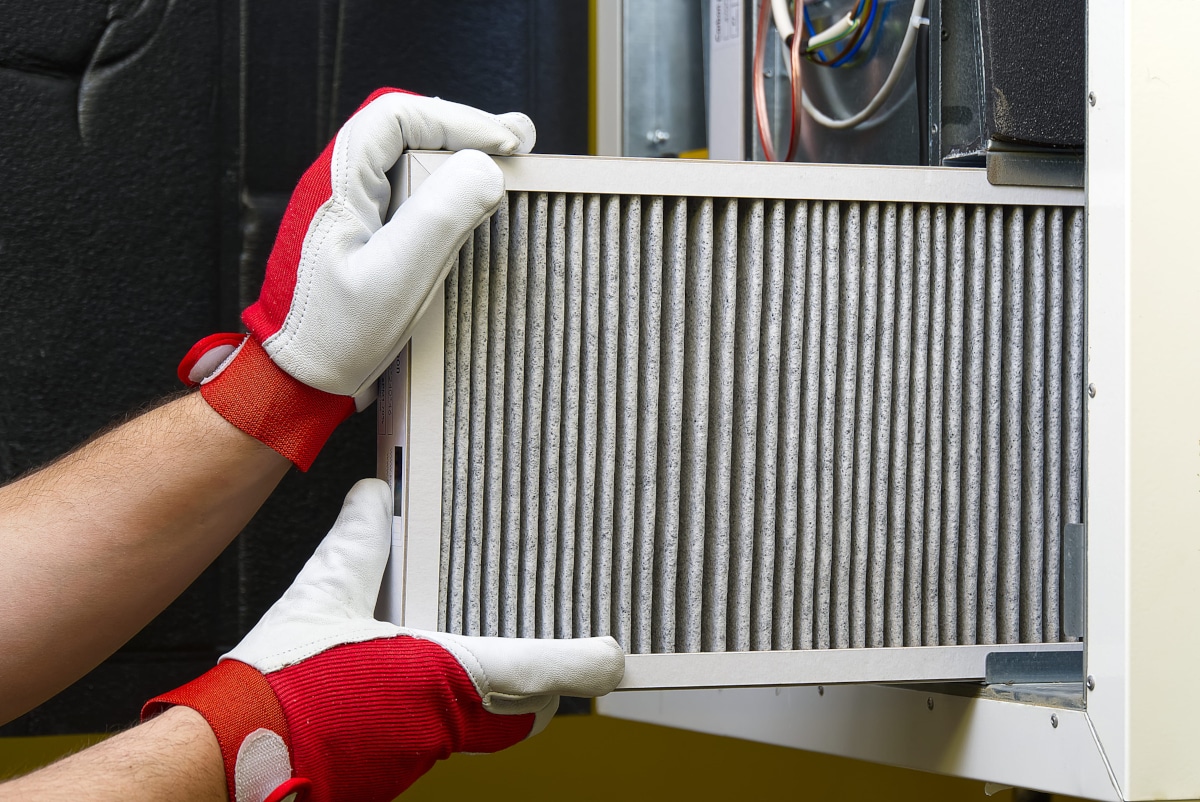
- Replace or inspect air filters every 1-3 months depending on household conditions
- Clean the outdoor condenser unit seasonally – especially before peak cooling and heating seasons
- Flush the condensate drain line regularly to prevent clogs and water damage
- Schedule a professional tune-up twice a year: once in spring for cooling, once in fall for heating
- Keep the area around the outdoor unit clear of vegetation, debris, and structures
- Listen and look for early warning signs – unusual sounds, higher bills, and uneven temperatures all have causes worth identifying early
- A consistent HVAC preventive maintenance routine is the single biggest factor in reaching the upper end of your system’s lifespan
Air Filters: The Most Frequent Maintenance Task
Replacing or cleaning your air filter is the single most impactful thing a homeowner can do between professional visits.
A clogged filter restricts airflow through the system, which forces the blower motor to work harder and causes the evaporator coil to run colder than it should – sometimes cold enough to freeze.
The rule of thumb for replacement intervals:
- Basic 1-inch filters: every 30-60 days
- Mid-grade 1-inch filters (MERV 8-11): every 60-90 days
- Thicker 4-5 inch media filters: every 6-12 months
Homes with pets, heavy dust, or anyone with allergies should lean toward the shorter end of those ranges. If you pull a filter out and can’t see light through it, it’s overdue.
Our filter instructions page covers sizing and proper installation steps.
Outdoor Condenser Unit: Keeping It Clear and Clean
The condenser unit sits outside and does the work of releasing heat from your home into the outdoor air. To do that efficiently, airflow has to move freely through the aluminum fins that wrap around the unit.
Debris – leaves, cottonwood fluff, grass clippings, dirt – collects on those fins and blocks airflow. The result is reduced cooling capacity and the compressor running hotter than it should, which shortens its life. Compressor replacement is one of the most expensive repairs in HVAC service.
Here’s what homeowners can do:
- Clear the area around the unit – Keep at least 2 feet of clearance on all sides. Trim back any shrubs or vegetation that have grown in.
- Rinse the fins with a garden hose – Spray downward from the top of the unit, using moderate pressure. Never use a pressure washer.
- Straighten bent fins – Hardware stores carry inexpensive fin combs. Bent fins are common and block airflow even when debris is cleared.
- Keep the pad level – The concrete pad the unit sits on can settle over time. A unit that’s tilting puts stress on the refrigerant lines and compressor.
Central Texas homes deal with cedar pollen, cottonwood, and oak debris in volume. Checking the condenser before summer and again in early fall takes about 10 minutes and directly impacts how hard the system has to work.
Our AC unit landscaping services has more on keeping the area properly maintained.
Condensate Drain Line: Small Clog, Big Problem
When your AC cools your home, moisture pulls out of the air and collects on the evaporator coil. That water drips into a drain pan and exits through a PVC line – the condensate drain. In humid conditions, algae and mold build up inside this line quickly.
When the line clogs, the drain pan fills. Most systems have a float switch that shuts the unit off when water backs up. That’s the safety working as designed – but it also means your AC stops running until the clog is cleared. Left unnoticed, water can overflow and damage ceilings, walls, and insulation.
Preventive steps:
- Every 1-3 months: Pour a cup of undiluted white vinegar or a diluted bleach solution into the drain access port near the air handler. This breaks down algae and biofilm before they accumulate.
- Annually: Have a technician blow out the line with nitrogen during a maintenance visit.
If you want more detail on this specific task, our post on bleaching your HVAC lines covers when and how to do it safely.
Evaporator and Condenser Coils: Dirt Affects More Than You Think
Evaporator coils sit inside the air handler and absorb heat from the air in your home. Condenser coils sit in the outdoor unit and release that heat. Both lose efficiency as a layer of dust, oils, and biological growth builds on their surfaces.
A thin coating on the evaporator coil acts like insulation – slowing heat transfer and reducing cooling capacity. A visibly dirty condenser coil forces the compressor to work at higher pressures and temperatures.
Homeowners can rinse the outdoor condenser coils as described above. The indoor evaporator coil is less accessible and typically cleaned during a professional tune-up.
If you see frost or ice forming on the indoor unit during cooling season, a dirty or restricted evaporator coil is one of the first things to suspect – alongside a clogged filter.
Thermostat and Controls: Calibration and Settings Matter
A thermostat that’s slightly miscalibrated or placed in a bad location causes the system to short-cycle (turn on and off too frequently) or run longer than needed. Either pattern adds wear to the compressor and blower motor.
Check that your thermostat:
- Is not mounted in direct sunlight or near a heat-producing lamp or appliance
- Is reading the actual room temperature accurately (compare with a separate thermometer)
- Is programmed with reasonable setback temperatures when the home is empty
If you’re using an older non-programmable thermostat, a basic programmable or smart model adds real efficiency without major cost.
Our post on the best thermostat settings when you’re not home walks through what actually makes sense in Central Texas summers.
Ductwork: The System You Can't See but Definitely Feel
Most homes lose 20-30% of conditioned air through duct leaks before it ever reaches a room, according to ENERGY STAR. That’s not a minor inefficiency – it means the system runs longer to reach the set temperature, which increases wear on every component.
Signs of duct problems:
- Rooms that take noticeably longer to reach the set temperature
- Visible tears or disconnected sections in accessible ductwork (attics, crawlspaces)
- Significant dust accumulating near registers
Homeowners can seal accessible duct joints with mastic sealant or metal-backed tape – not standard duct tape, which fails quickly. For inaccessible runs or if you suspect major air loss, a professional assessment is more efficient.
Our guide on how to clean your air ducts safely covers what homeowners can handle themselves and where professional help adds value.
You might also be interested in: Common HVAC Questions: What Every Homeowner Should Know
When to Schedule Professional Maintenance
DIY tasks cover a lot of ground, but a complete HVAC preventive maintenance plan includes a professional tune-up twice a year to address components that require tools, training, and safety licensing to service correctly.
During a seasonal maintenance visit, a technician will typically:
- Check refrigerant levels and inspect for leaks
- Measure voltage and current on motors and electrical connections
- Inspect the heat exchanger for cracks (a cracked heat exchanger can allow combustion gases into the living space)
- Lubricate moving parts
- Test safety controls and verify thermostat calibration
- Clear the condensate drain and inspect the drain pan
- Check the flame on gas furnaces – it should be steady and blue, not yellow or orange
The right schedule for Central Texas: spring before cooling season starts, fall before you first run the heat. Contractors get busy once the weather turns, so booking early avoids the longest waits.
Our HVAC maintenance service includes a full system inspection for both heating and cooling equipment.
Safety Components: Don't Overlook These
Two things homeowners sometimes skip: carbon monoxide detectors and the furnace flame check.
Gas furnaces produce carbon monoxide as a byproduct of combustion. A cracked heat exchanger can route those gases into the living space rather than venting them safely. CO is odorless and colorless, which is what makes it dangerous.
Our post on the importance of carbon monoxide detectors explains what to look for and where to place detectors.
On gas furnaces, the burner flame should be a consistent blue. Yellow or orange flames indicate incomplete combustion and should prompt a call to a technician, not a DIY adjustment.
Conclusion
HVAC maintenance isn’t one large annual task – it’s several small ones spread across the year, plus two professional visits that catch what a homeowner can’t easily reach or test.
The homes that go years without a breakdown are almost always the ones where filter changes happen on schedule, the outdoor unit is kept clean, and a technician has checked the refrigerant and electrical components in the past 12 months.
If you’re behind on any of these, starting with the filter and the outdoor unit today puts you ahead of most.
Frequently Asked Questions
How often should HVAC components be maintained?
Filters should be checked monthly and replaced every 1-3 months, depending on type and household conditions. The outdoor unit and condensate drain line should be serviced seasonally. A professional inspection is recommended twice yearly – once for the cooling system in spring and once for the heating system in fall.
What HVAC maintenance can homeowners do themselves?
Homeowners can replace air filters, clear debris and rinse the outdoor condenser unit, pour vinegar into the condensate drain access port, keep duct registers clean and unobstructed, and verify thermostat placement and programming. Refrigerant checks, electrical testing, and heat exchanger inspections are the professional side of any HVAC preventive maintenance plan and require a licensed technician.
What happens if you skip HVAC maintenance?
Neglected systems run less efficiently, which shows up first as higher energy bills. Over time, restricted airflow and dirty components put mechanical stress on the compressor and blower motor – the most expensive parts in the system. Regular maintenance is significantly less costly than an early compressor or heat exchanger replacement.
How do I know if my HVAC system needs service now?
Short cycling (frequent on-off cycling), unusually high energy bills, uneven temperatures between rooms, ice on the indoor unit, standing water near the air handler, and unusual sounds (banging, squealing, rattling) are all reasons to call a technician before the next scheduled visit.
How long does an HVAC system last with proper maintenance?
Air conditioning units typically last 10-15 years, furnaces 15-20 years, and heat pumps around 16 years with proper care. Consistent maintenance – especially keeping refrigerant levels correct and preventing coil damage – is the strongest factor in reaching the upper end of those ranges.