
Air duct cleaning helps remove dust and debris that circulate through your home’s heating and air conditioning system. Light surface cleaning can be done yourself, but deeper HVAC duct cleaning often requires professional equipment.
This guide explains how to clean air ducts safely, what DIY air duct cleaning actually accomplishes, and when professional service becomes the practical next step.
Key Takeaways
Light air duct cleaning near vents can be done safely at home, but it only addresses surface dust.
DIY air duct cleaning does not reach deep duct runs, turns, or system components.
Dust buildup inside ducts can restrict airflow and cause HVAC systems to work harder.
Professional air duct cleaning removes debris safely using sealed equipment and controlled vacuuming.
Clean ducts support better airflow, lower energy costs, and healthier indoor air quality.
What Happens Inside Air Ducts Over Time
Air ducts collect dust, debris, and airborne particles as air moves through your home.
Even with regular filter changes, small particles pass through and settle inside ductwork. Over time, this buildup restricts airflow, causes the system to work harder, and can raise energy costs. In humid environments, moisture can combine with debris and contribute to mold growth.
Homeowners usually notice symptoms before they see the problem.
- Dust reappears quickly after cleaning.
- Air smells stale when the system turns on.
- Rooms feel unevenly cooled or heated.
These are common signs that air duct maintenance is overdue.
When Cleaning Air Ducts Yourself Is Reasonable
DIY air duct cleaning is useful for removing loose dust near vents and registers.
This approach works best when buildup is light and limited to visible areas. Homes with pets, minor remodeling, or long gaps between cleanings often benefit from this type of home air duct cleaning.
Surface cleaning can support cleaner air and improve indoor air quality slightly, especially when paired with regular filter replacement. It does not address deep duct contamination or system-level issues.
You might also be interested in: MERV Ratings Explained & What They Mean for Your Home’s Air Quality
Tools Needed for DIY Air Duct Cleaning
Basic tools are enough for light cleaning, but limits matter.
- Vacuum with hose attachment or shop vacuum
- Microfiber cloths for wiping surfaces
- Screwdriver to remove vent covers
- Mild soap and water for cleaning grilles
- Replacement air filter
Microfiber cloths are important because they capture fine dust instead of spreading it. Avoid stiff brushes or long tools that can damage duct lining or push debris deeper into the system.
How to Clean Air Ducts Yourself Step by Step
This process focuses on safe, surface-level cleaning only.
- Turn off the HVAC system at the thermostat.
- Remove vent covers and registers.
- Vacuum the visible duct opening as far as the hose allows.
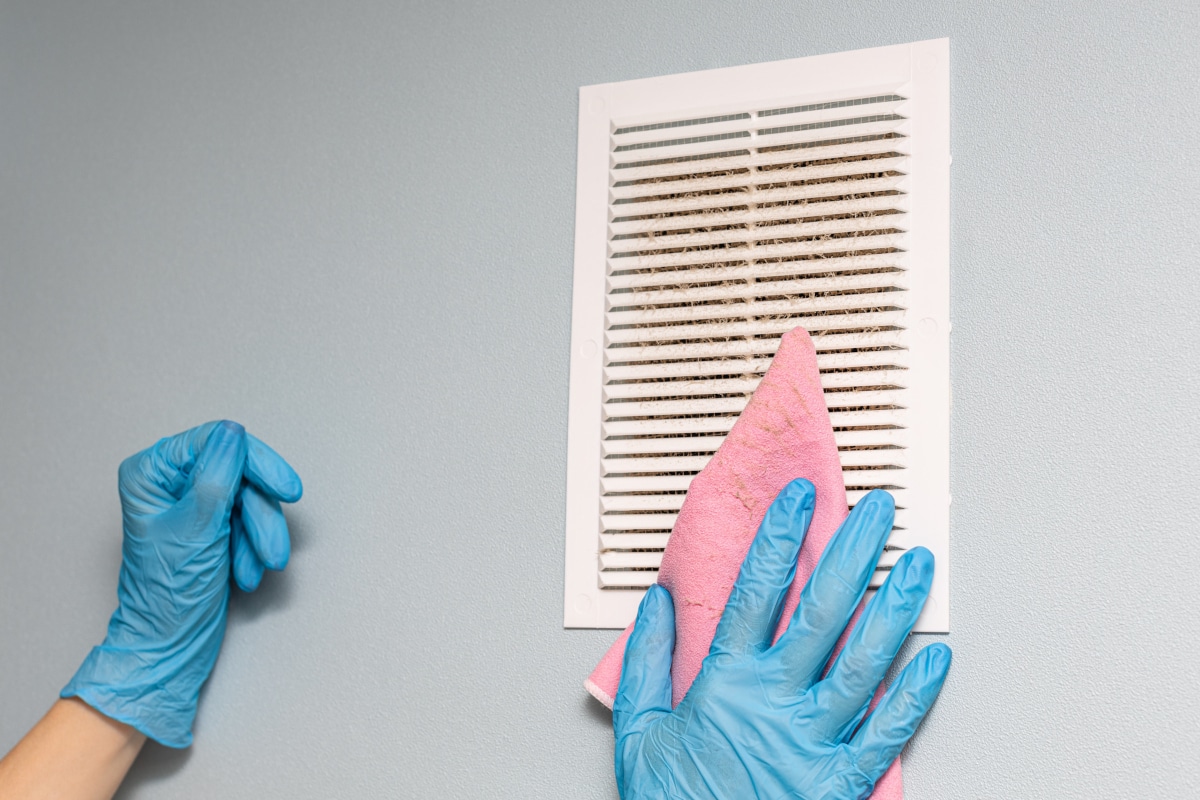
- Wipe interior edges with a microfiber cloth.
- Wash and dry vent covers before reinstalling.
- Replace the air filter before restarting the system.
This method removes loose dust that would otherwise reenter the living space. It does not clean long duct runs, turns, or the air handler.
Why DIY Air Duct Cleaning Has Clear Limits
Most of the duct system is inaccessible without specialized equipment.
Air ducts extend well beyond what household tools can reach. Pushing tools deeper can dislodge debris that settles farther into the system. In older homes, aggressive cleaning may damage insulation or flexible duct materials.
DIY methods also cannot address compacted debris, biological growth, or buildup near the blower and air handler. These areas require controlled, high-powered vacuuming and containment to prevent contamination from spreading.
When Professional Air Duct Cleaning Is the Better Option
Professional air duct cleaning is appropriate when contamination goes beyond surface dust.
Common indicators include:
- Persistent dust shortly after cleaning
- Musty or unpleasant odors when the system runs
- Visible mold near vents or inside ducts
- Uneven airflow throughout the home
- Allergy symptoms linked to system operation
Air duct cleaning companies use sealed systems that place the ductwork under negative pressure while debris is removed. This prevents loosened material from entering the home.
Organizations associated with national air duct cleaners standards emphasize inspection, containment, and proper equipment. These practices protect both the HVAC system and indoor air quality.
How Often Is Air Duct Maintenance Needed?
Most homes benefit from professional cleaning every three to five years.
Homes with pets, smokers, allergies, or heavy HVAC use may need service more often. Between professional visits, regular filter changes, and light vent cleaning help maintain results.
Skipping air duct maintenance entirely often leads to higher energy bills and premature equipment wear as the system works harder to compensate for restricted airflow.
You might also be interested in: Common HVAC Questions: What Every Homeowner Should Know
Choosing a Qualified Air Duct Cleaning Service
Not all air duct cleaning services follow best practices.
Avoid providers that offer unusually low prices without inspection or promise immediate results. A qualified contractor explains their process, uses proper containment, and avoids unnecessary chemical treatments.
For homeowners in Central Texas, AIM AC and Heating Services treats air duct cleaning as part of a broader indoor air quality approach. The focus is on system performance, clean air, and long-term reliability, not just surface-level dust removal.
Frequently Asked Questions
Yes, especially when ducts contain heavy dust and debris. Professional cleaning is more effective than DIY methods for this purpose.
Yes. Restricted airflow forces the system to work harder, which increases energy use and utility bills.
DIY cleaning helps with visible dust but does not replace professional HVAC duct cleaning for deeper system issues.
Most residential jobs take two to four hours, depending on system size and condition.